Our Hamlets & History: Walter's Falls, the village a waterfall built
Walter's Falls exists because of a drop in a small river. More than 170 years ago, a settler named John Walter saw that drop, on a branch of the Big Head River, as a source of power, and a village grew up around it.
By David Ellis · · 3 min read
Walter's Falls exists because of a drop in a small river. More than 170 years ago, a settler named John Walter saw that drop, on a branch of the Big Head River, as a source of power, and a village grew up around it.
The earliest detailed account is in William W. Smith's Gazetteer and Directory of the County of Grey for 1865-6. Smith wrote that in 1852, "John Walter, Esq., took up 300 acres of wild land, with magnificent water-power, on the S. branch of Big Head River." Edith L. Marsh's 1931 A History of the County of Grey gives the same year and acreage. She wrote that the spot "was all a forest then, but he recognized the excellent water-power to be utilized."
Mills, one after another
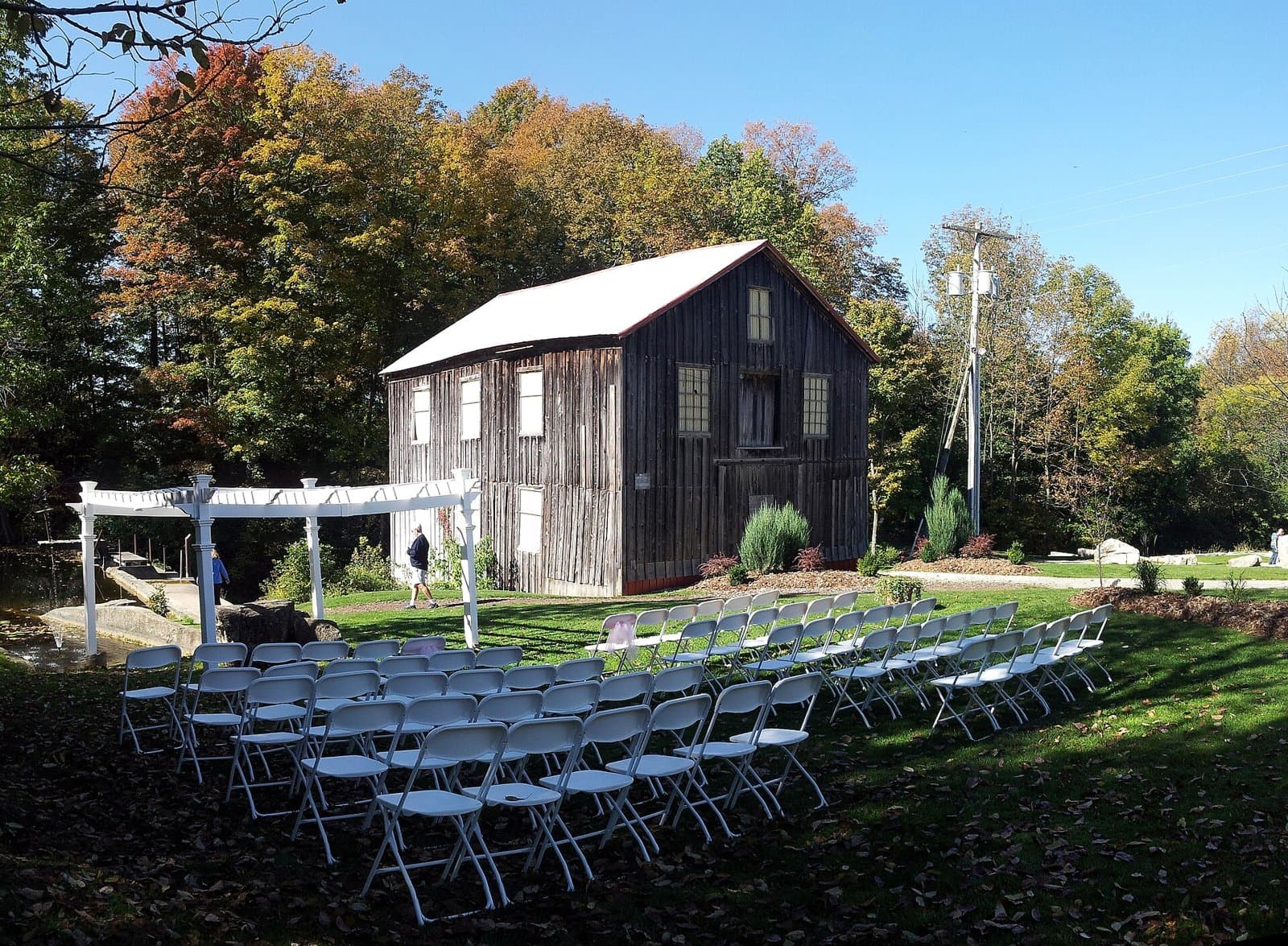
Both books agree that the first sawmill was built in 1853. A grist mill followed "in 1854 or '55," according to the gazetteer, and a fulling and carding mill for finishing wool cloth was built in 1856. Smith reported that the grist mill and the old sawmill were "both supplied from the same flume." He also wrote that Walter had built a new sawmill farther upstream in 1864.
Not every account agrees. Visit Grey, Grey County's tourism site, says the first sawmill was established in 1854. The Banner has used the date given in both histories.
The carding mill was leased to John Hogg, Smith wrote, and Hogg "kept a power-loom in operation." But the gazetteer also reported that while it was being prepared, "an accidental fire has destroyed the premises."
A village of 80
In 1865, Walter's Falls was "a small village in the N. E. part of the township of Holland," with a population of 80, according to the gazetteer. Smith listed a post office, mills, a tavern, a blacksmith, a wagon-maker, two carpenters, a millwright and a tinsmith. "At the present moment there is no Storekeeper in the village," he added. Mail came Tuesdays and Saturdays from Meaford by way of Griersville and Blantyre. A resident Wesleyan minister held regular services.
The directory lists John Walter as postmaster and owner of the grist mill and sawmills. Also listed are Philip Walter, miller and farmer, Thomas Walter, millwright, and John Walter Jr., farmer.
Holland Township no longer exists as a municipality. Ontario's municipal restructuring records show that the townships of Holland and Sullivan and the Village of Chatsworth were amalgamated as the Township of Chatsworth on Jan. 1, 2000.
The falls themselves
Every early writer describes the drop. Smith wrote that Walter said "the water falls several hundred feet, within the bounds of his property." In the village, the fall was "perhaps 50 feet," including one cascade of about 20. A little below the mills, Smith wrote, was "a beautiful cataract of 40 feet perpendicular," dropping into a wooded glen "between limestone rocks." In 1931, Marsh described a fall of about 20 feet in the village and, below it, "a very beautiful and perpendicular fall of double that height."
N. W. Campbell's 1895 Geographical Handbook of the County of Grey called Walter's Falls "a prosperous village," with a population of 300, where the river "supplies excellent water power for flour, saw and woollen mills." But Campbell gave a different height: "The falls are about 30 feet high." The Banner hasn't measured them.
Why it mattered
Marsh summed up the village's rise this way: "With such excellent water-power, and surrounded by good farm land, it is not surprising that Walter's Falls became an important place in the township."
Your turn
Do you have old photos, family stories or documents about Walter's Falls or another Chatsworth hamlet? Share them at news@chatsworthbanner.ca or through our tip form.
Get stories like this in your inbox.
Council, roads, events and the week's top local stories. One short email, free to sign up.